top of page

01
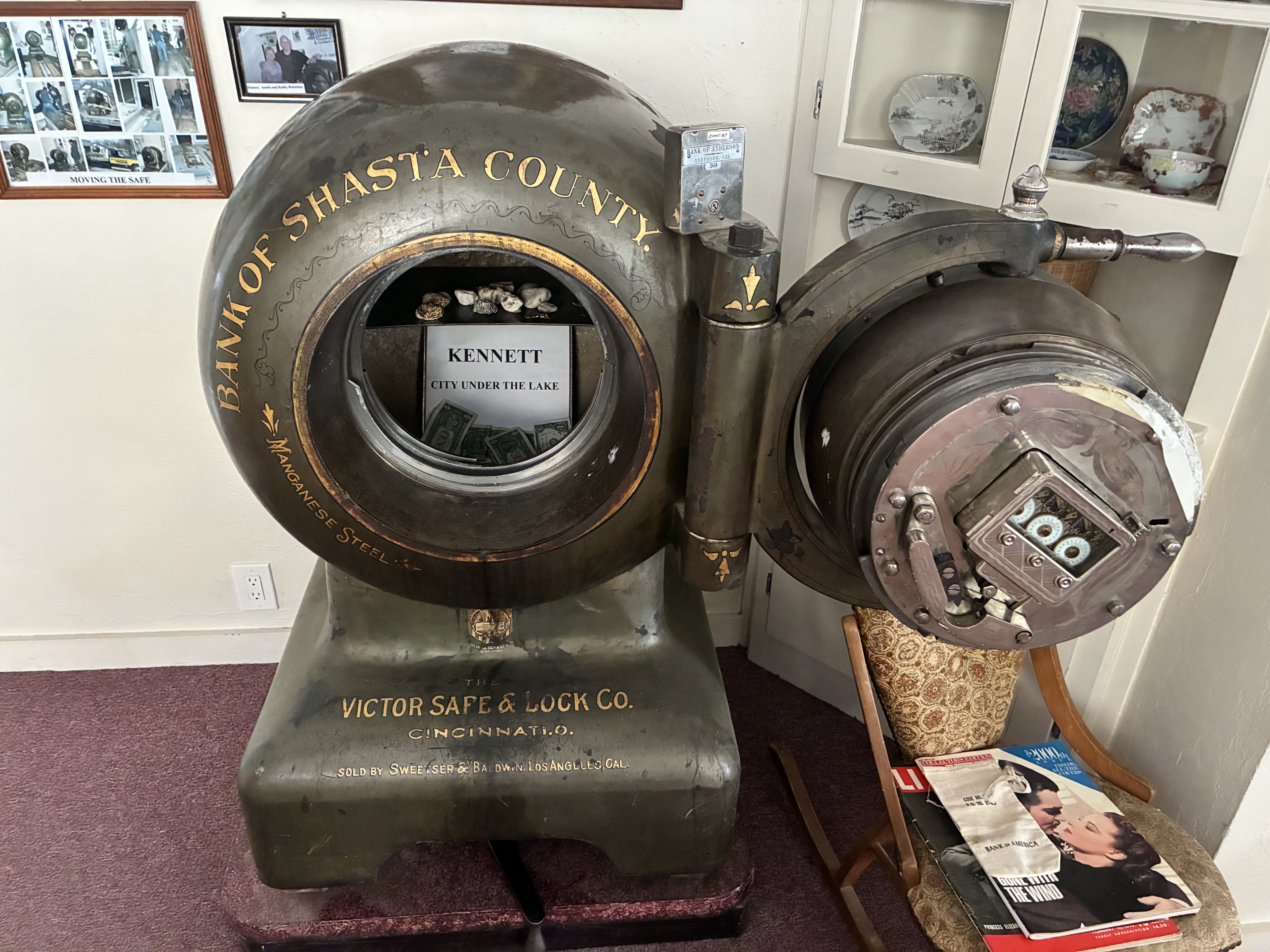
The two-ton Kennett safe — from the first town under Shasta Lake.
When Shasta Dam filled, Kennett went under water — the first town lost to the lake. Its bank's safe didn't go with it. This two-ton Victor Safe & Lock cannonball safe came out of the Bank of Shasta County in Kennett, and the little sign inside the door still says where it came from.

02
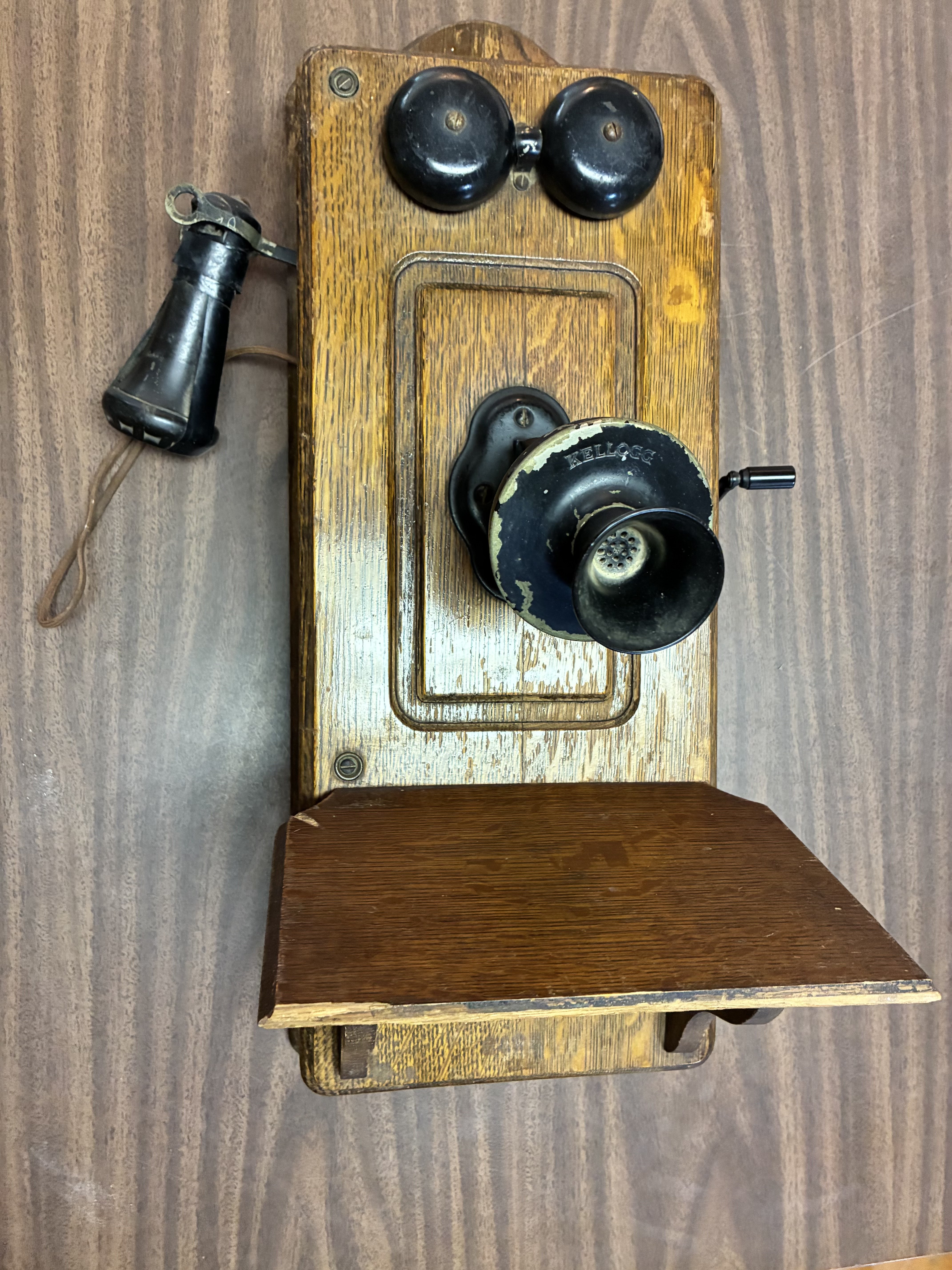
The Kellogg wall phone, from a mine that closed in the 1900s.
A Kellogg wall telephone out of a mine that closed in the 1900s — crank on the side, twin bells on top, and a receiver you held to your ear. It hung on a mine wall, and now it hangs here.

03
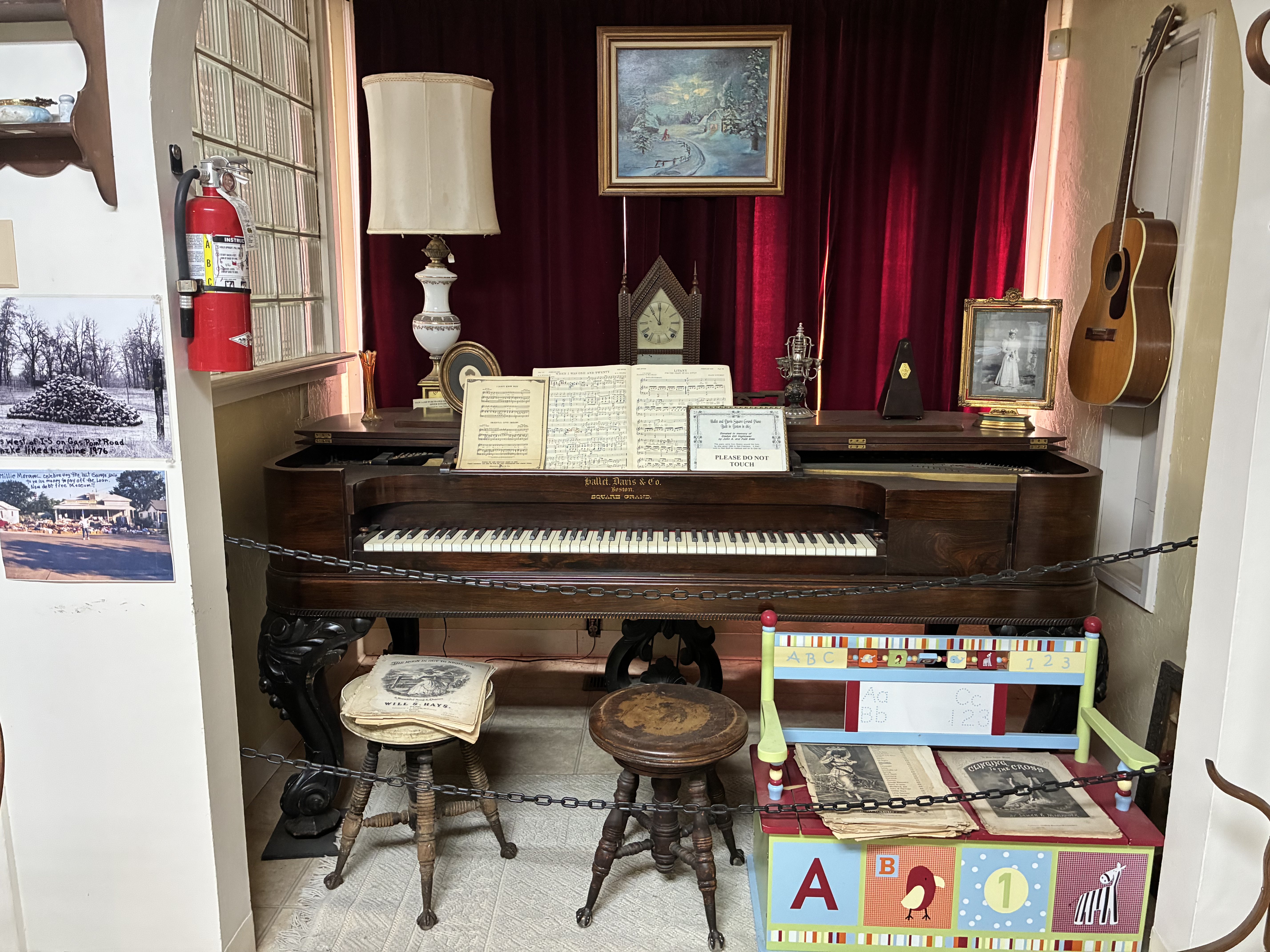
A grand piano that came around South America to Anderson.
A grand piano that traveled around South America to reach Anderson. It sits in the museum now, the center of its room — a reminder of how far things traveled to get to a small town before highways.

04
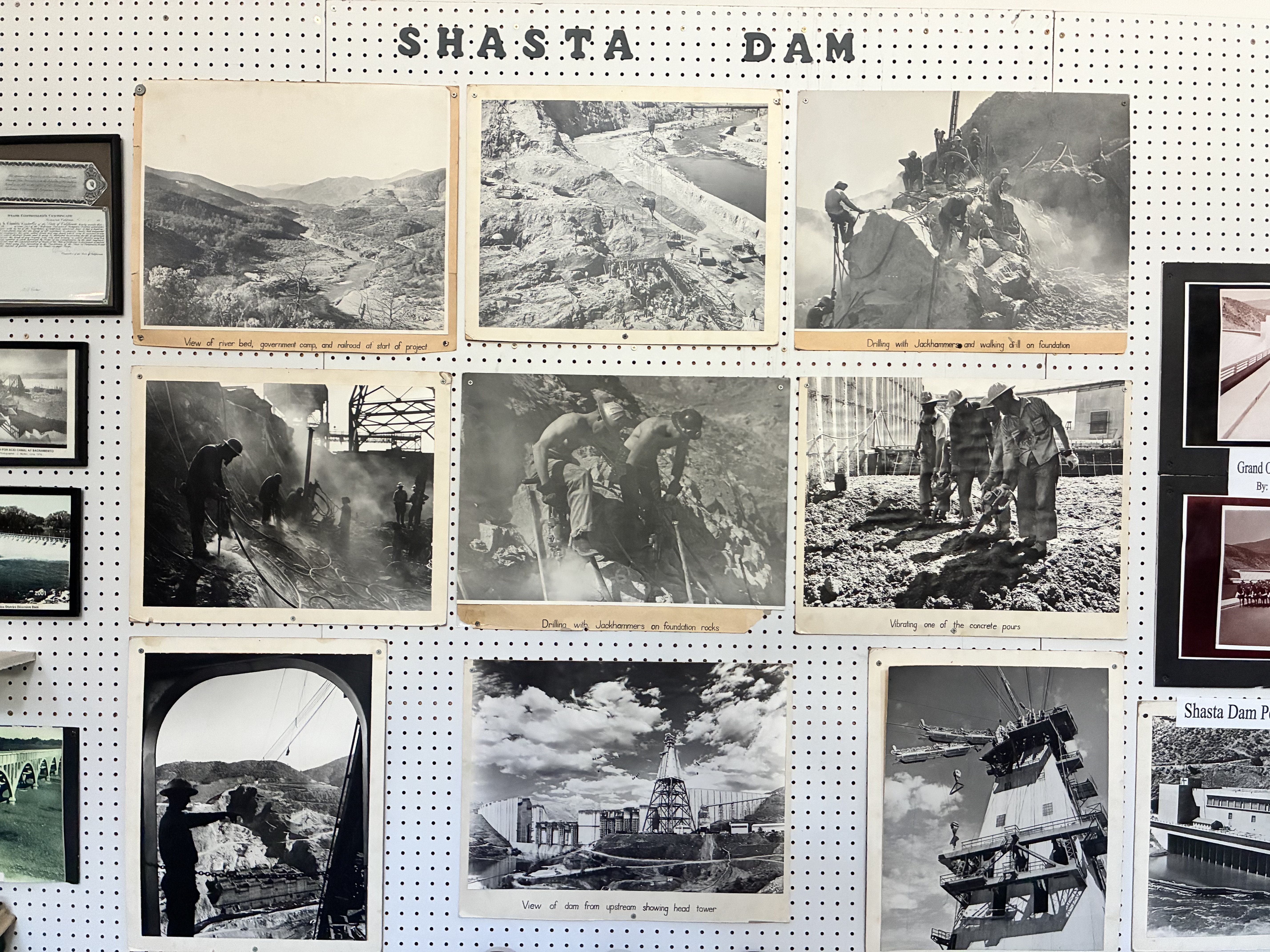
Building Shasta Dam, in the workers' own photographs.
Construction photographs of Shasta Dam, donated by Dave Rountree — the riverbed before the work, jackhammer crews on foundation rock, concrete pours, and the head tower rising. The wall reads like a day on the job.

05
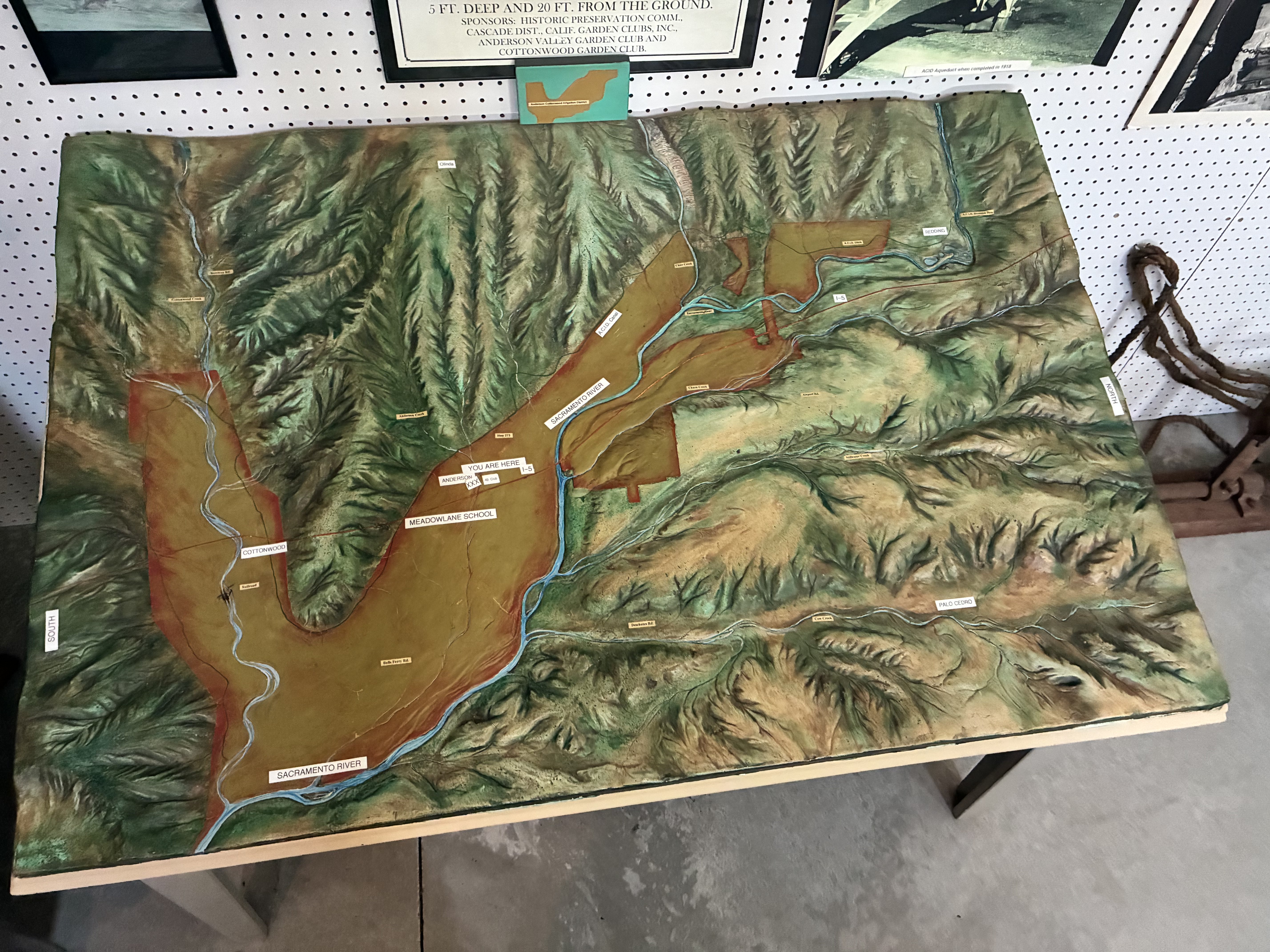
The ACID canal system, mapped in fiberglass by Rex Moravec.
A fiberglass relief map of the Anderson-Cottonwood Irrigation District system, made by Rex Moravec. It shows the canals and the country they water, in raised relief — the shape of the land and the water that made farming here possible.

06
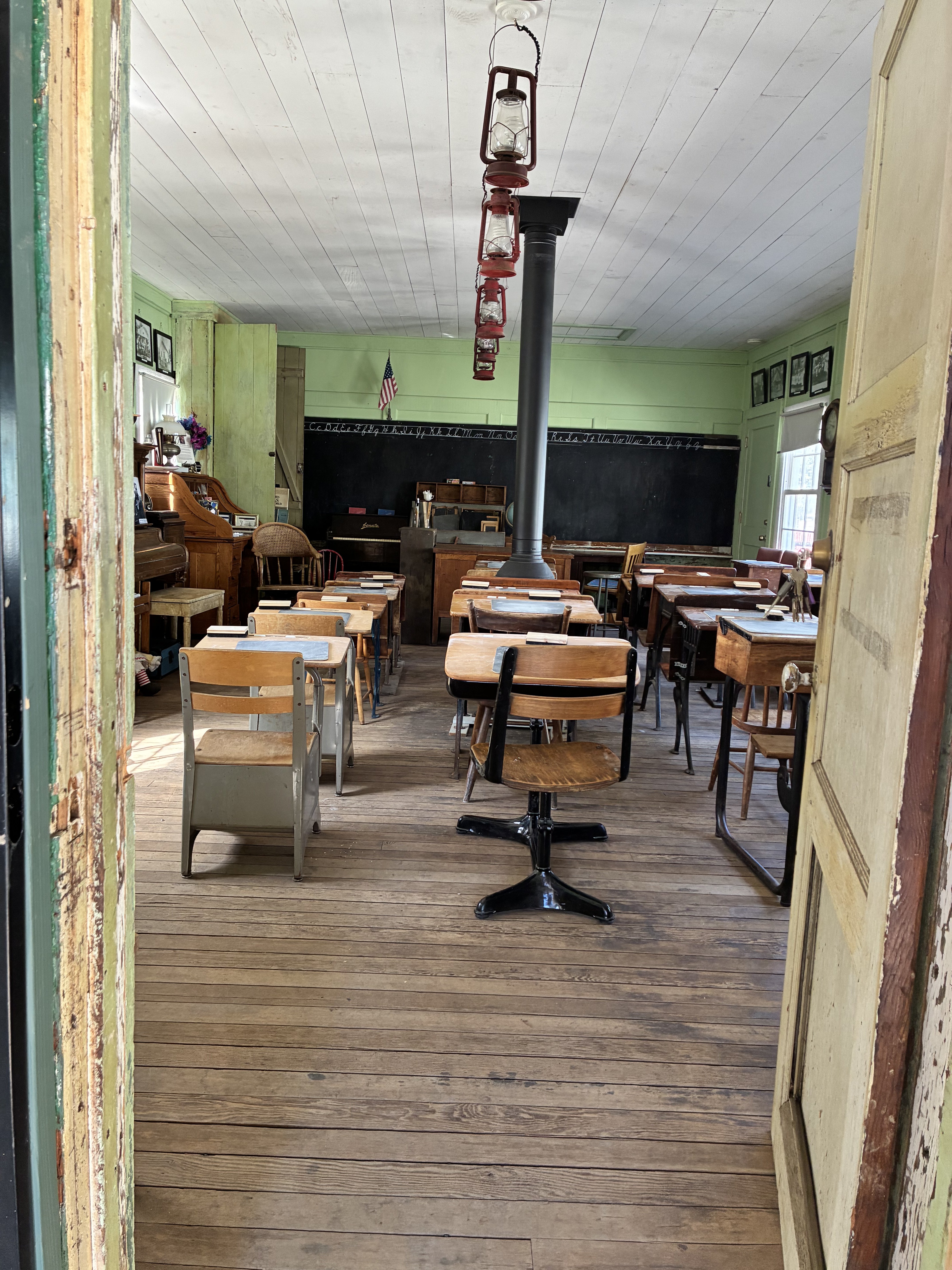
The one-room Columbia school — desks, stove, and all.
The museum's one-room Columbia school — rows of desks, a potbelly stove, a blackboard, and a closet library. The walls carry photographs of Shasta County's one-room schools, and the drinking fountain is a pan of water, the way it was.

07
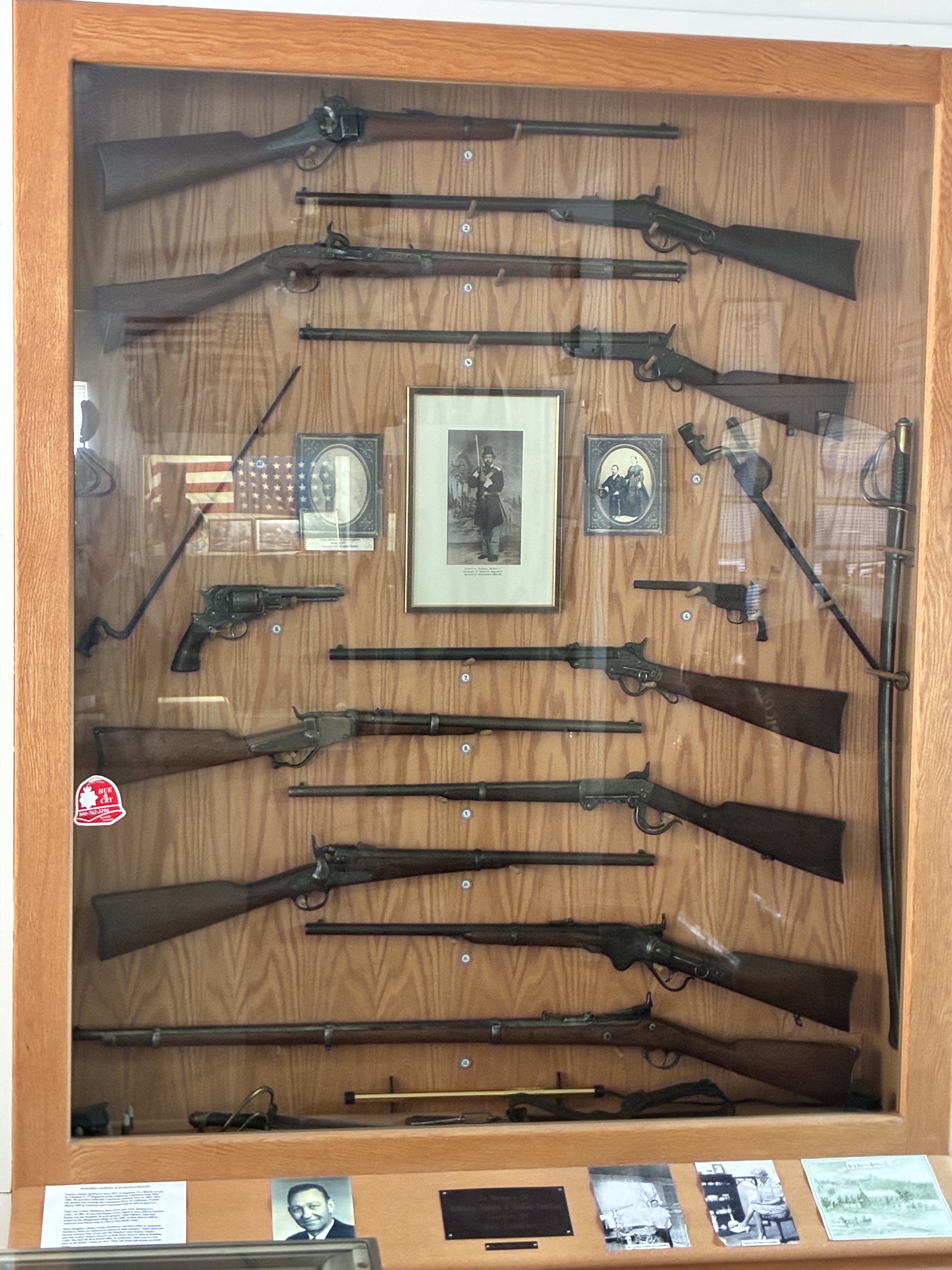
Civil War firearms, kept behind glass.
A wall case of Civil War firearms — rifles and pistols from the 1860s, with portraits and papers alongside. The case keeps them close enough to study and safely behind glass.

08
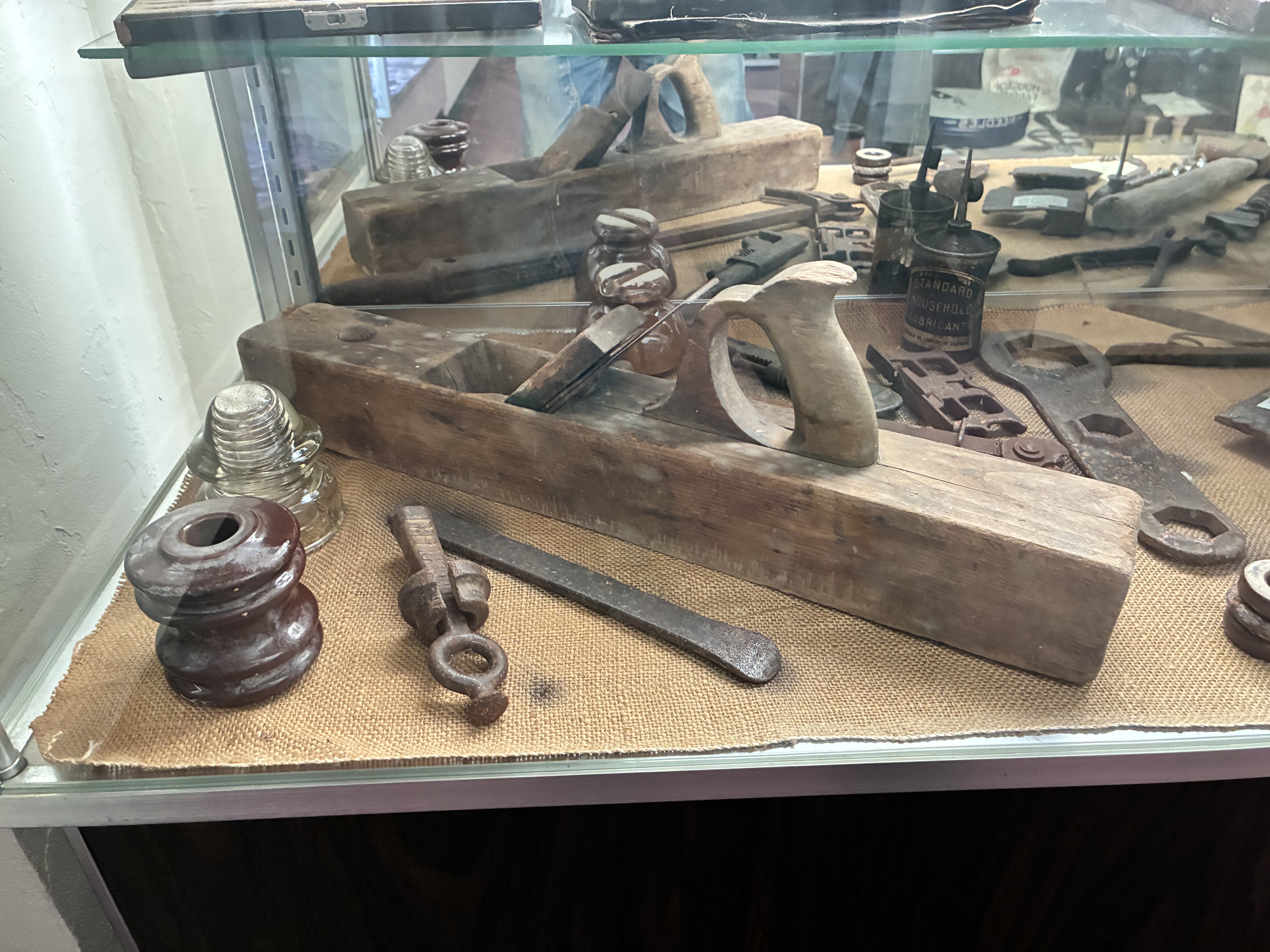
Tools that worked without a single watt of electricity.
Wood planes, wrenches, oil cans, and insulators — the non-electric tools that built and fixed things before power tools. Every piece in this case worked by hand.

09
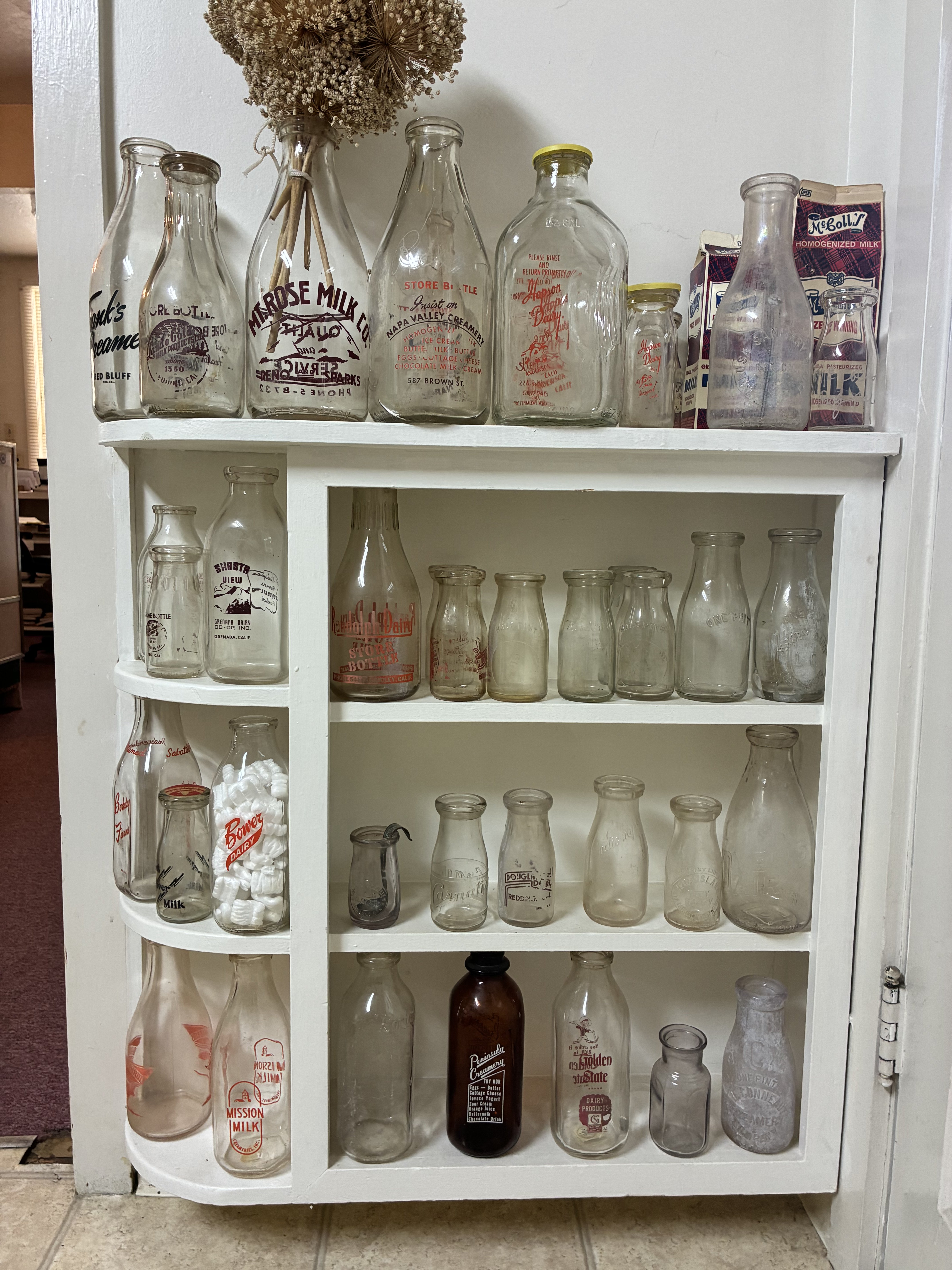
North-state milk bottles, from when milk came in glass.
Milk bottles from dairies across the north state, shelf after shelf — including Hopson's, Anderson's own. When milk came in glass, the bottle told you where it came from.

10
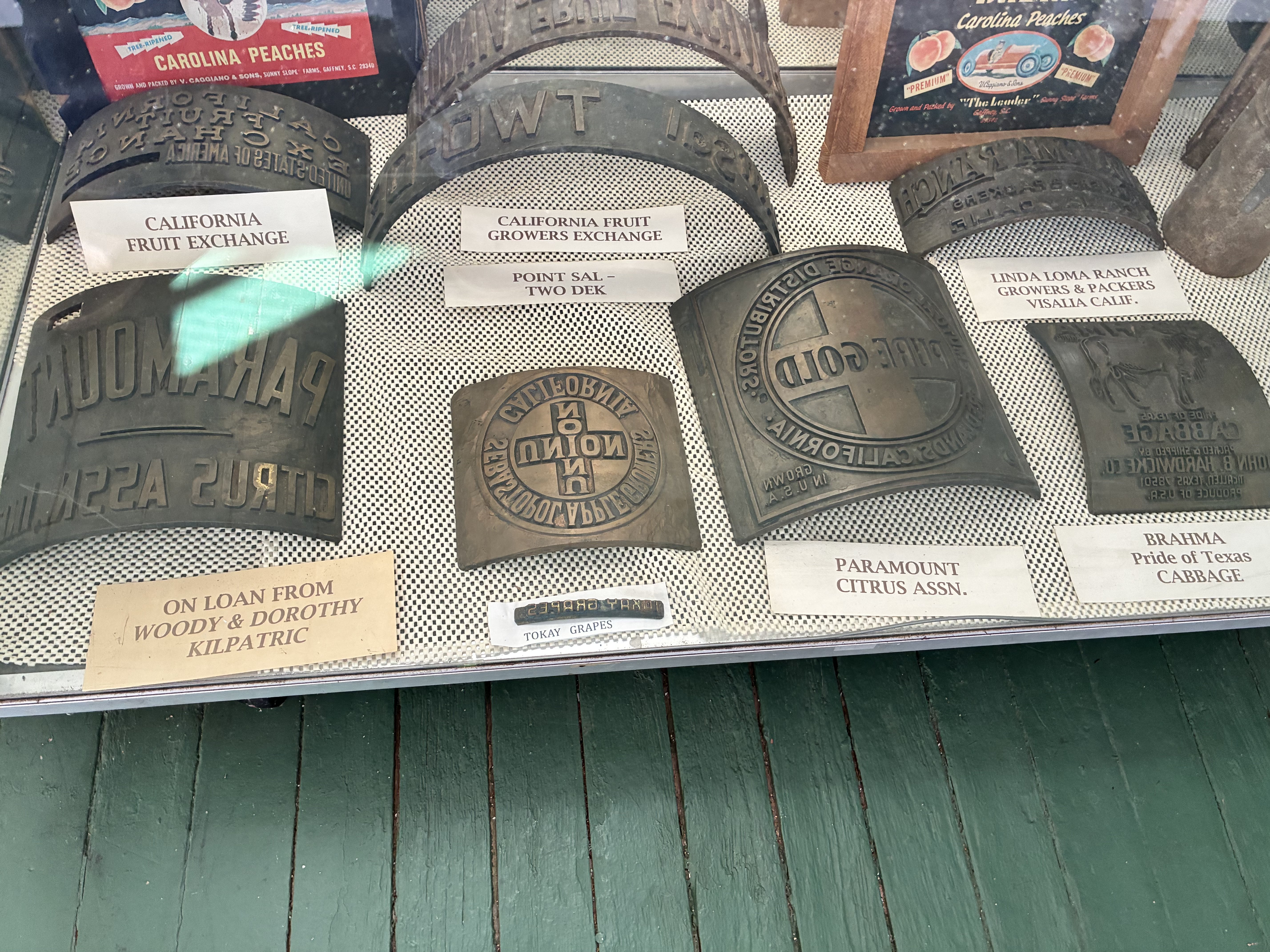
Box ends from Anderson's box factory — made for fruit packing companies.
Printed box ends made at Anderson's box factory — roller plates stamped the growers' and packers' names and brands onto the wood, and the finished ends went out to fruit packing companies. The box end was the label, the advertisement, and the address all at once, and the museum holds a wall of them.

11
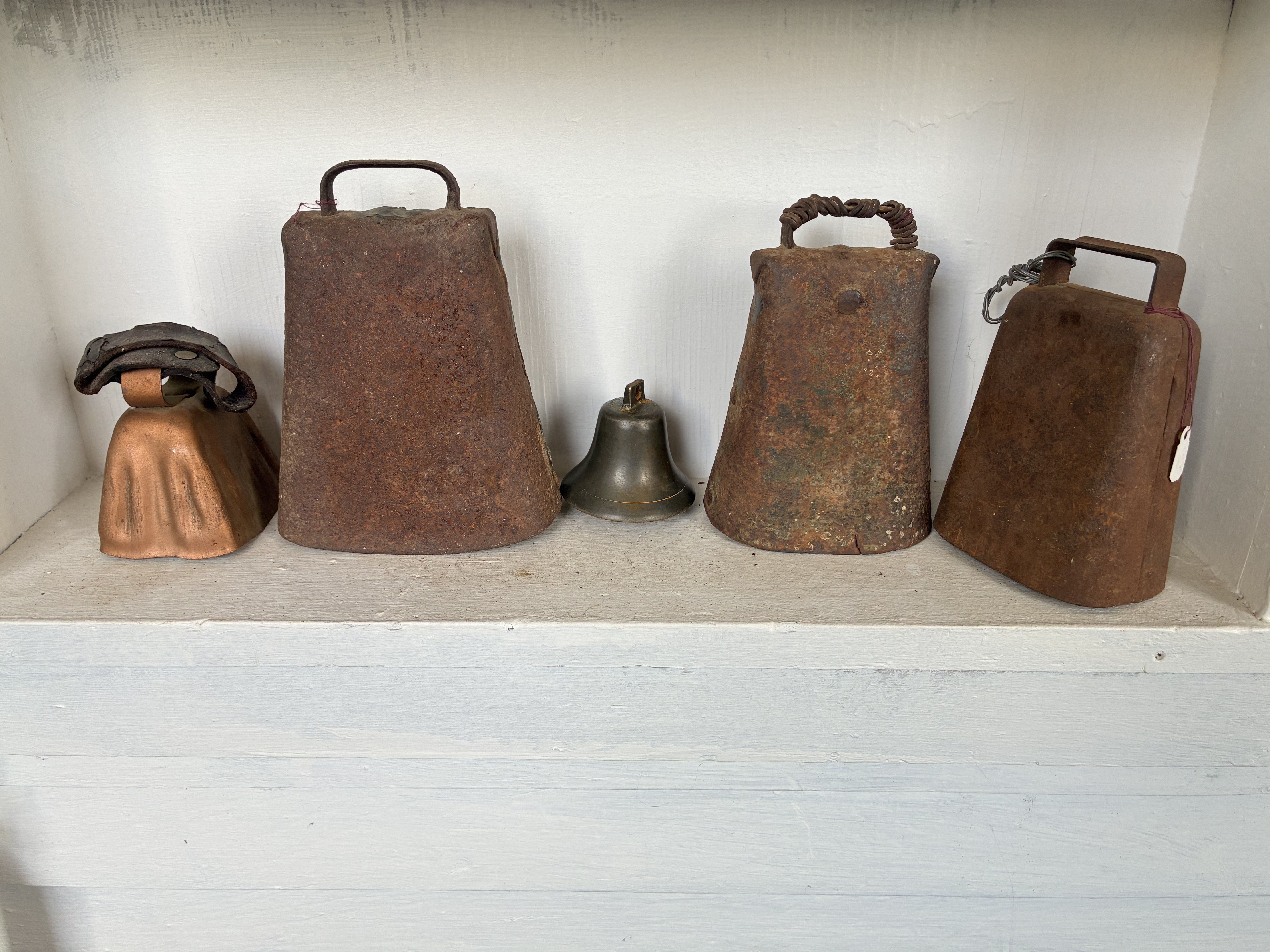
Cowbells — how ranchers tracked their cows.
Cowbells in every size, hung in a row. Before fences and tracking collars, a bell's tone told a rancher which cow was where — and whether she was still where she belonged.

12
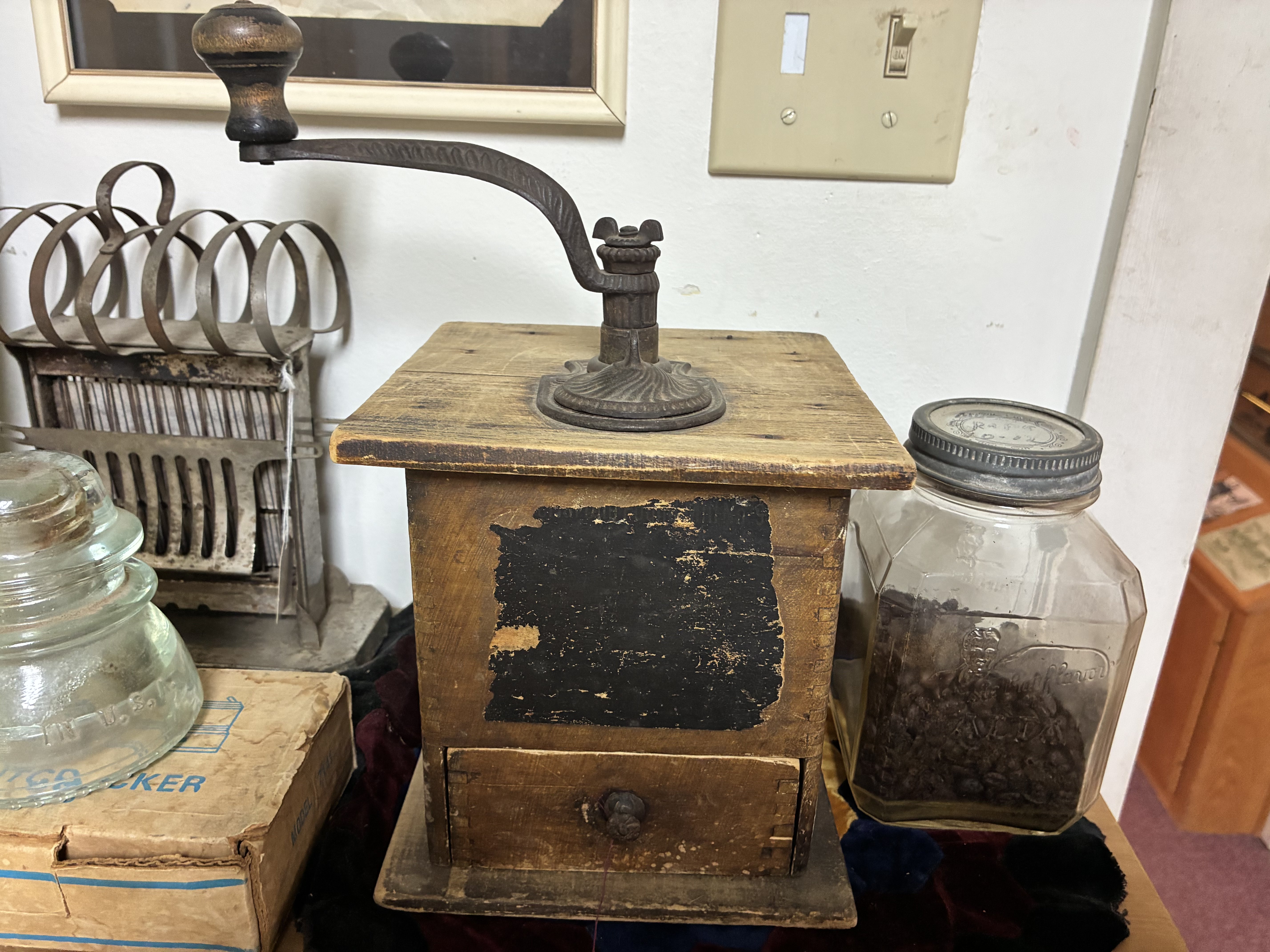
Coffee beans, sold and ground at home.
A coffee grinder with its drawer and a jar of beans beside it. Coffee was sold as beans and ground at home — the grinder sat on the kitchen counter and worked every morning.

13
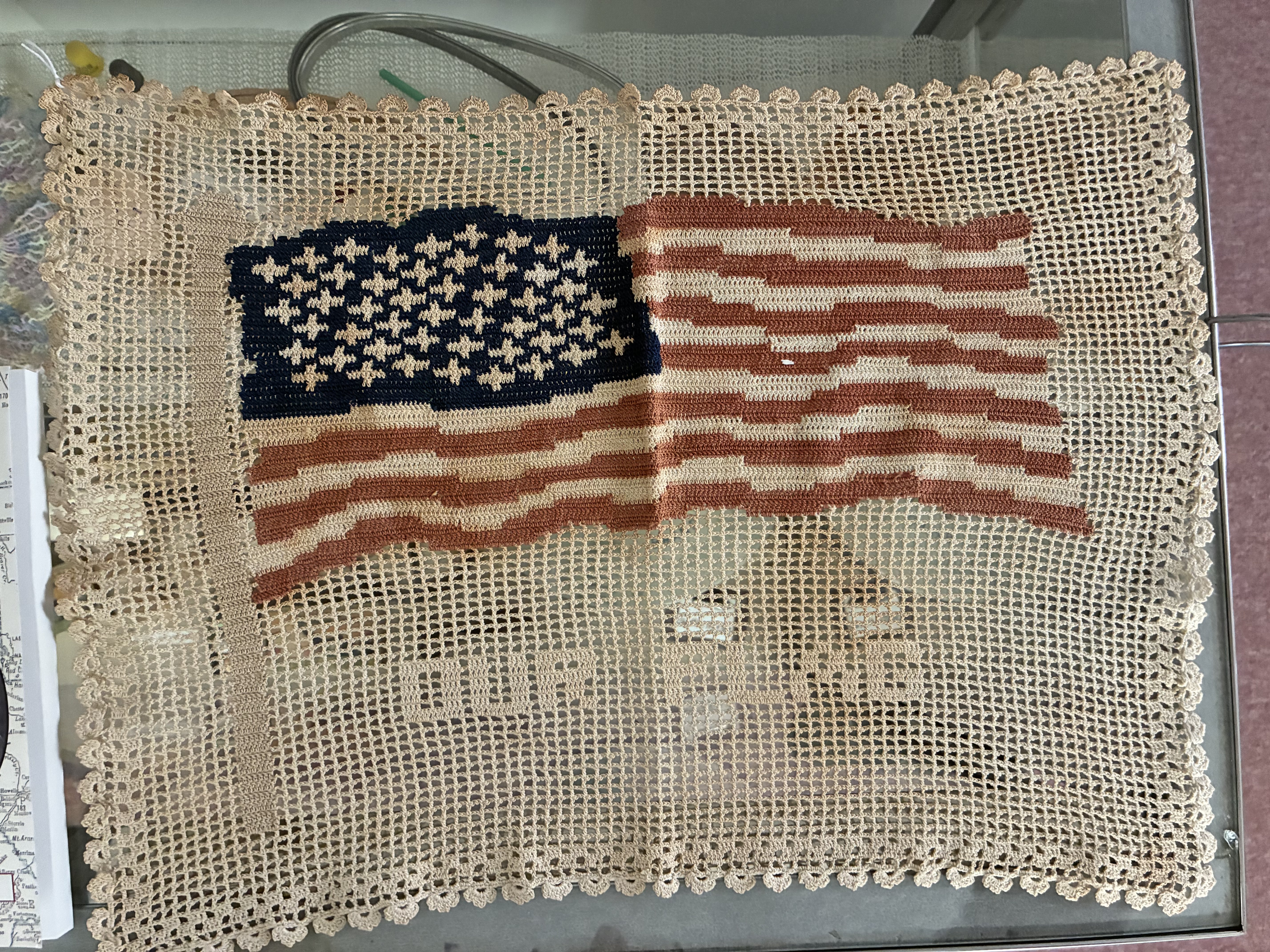
An American flag, made entirely by tatting.
An American flag made entirely by tatting — knotted lace, loop by loop, red, white, and blue. It's the kind of patience you don't see anymore, and it holds together as a flag you can read from across the room.

14
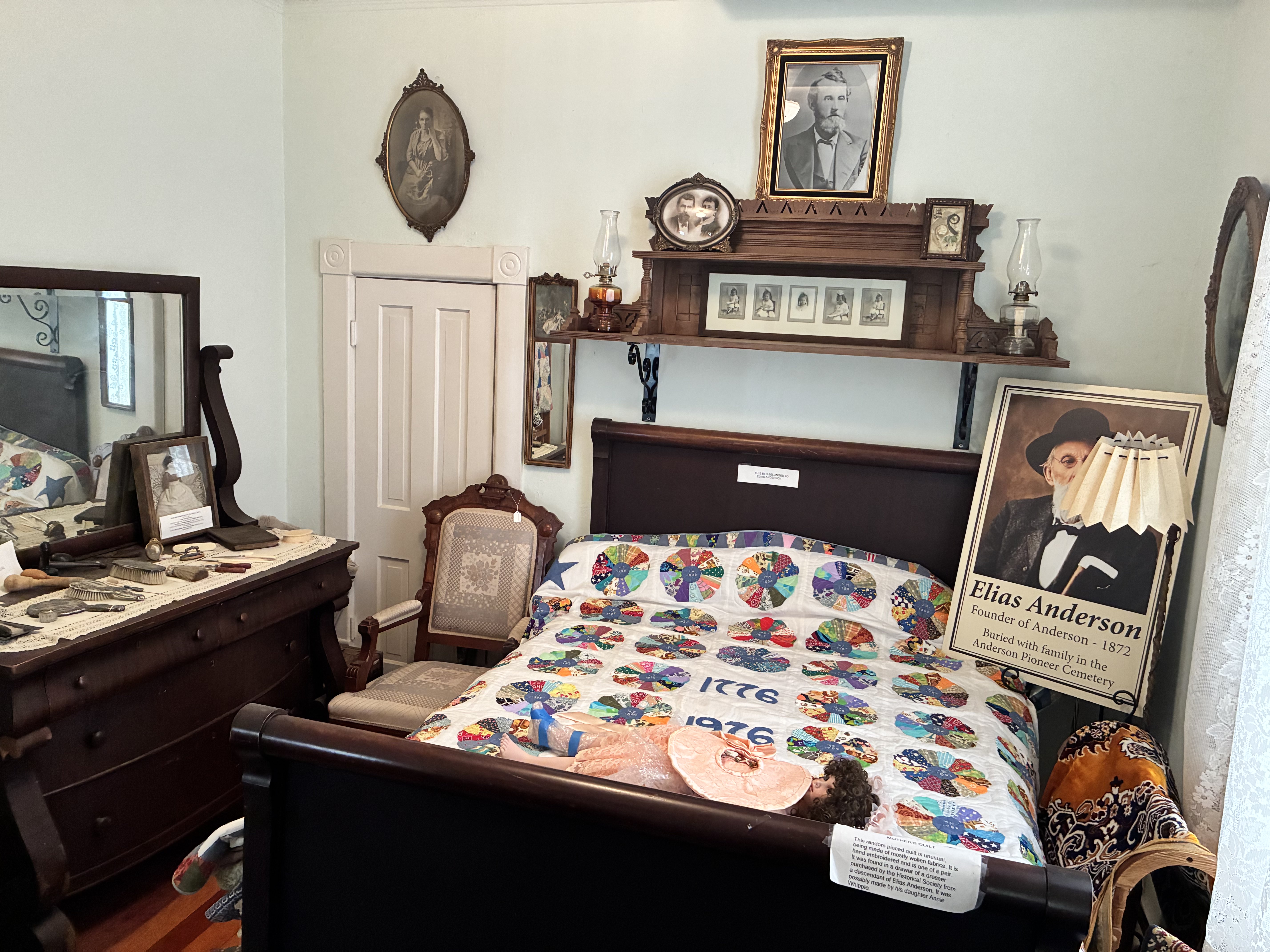
Elias Anderson's bedroom set — the town's namesake.
The bedroom set of Elias Anderson, the man Anderson is named for — bed, dresser, and portraits, kept together as a room. It's the most personal corner of the museum: one man's furniture, still arranged like somebody lives there.
bottom of page